
A Bitter & Contentious Interview with... Myself
My novelette "A Square of Dirt" deserves no less

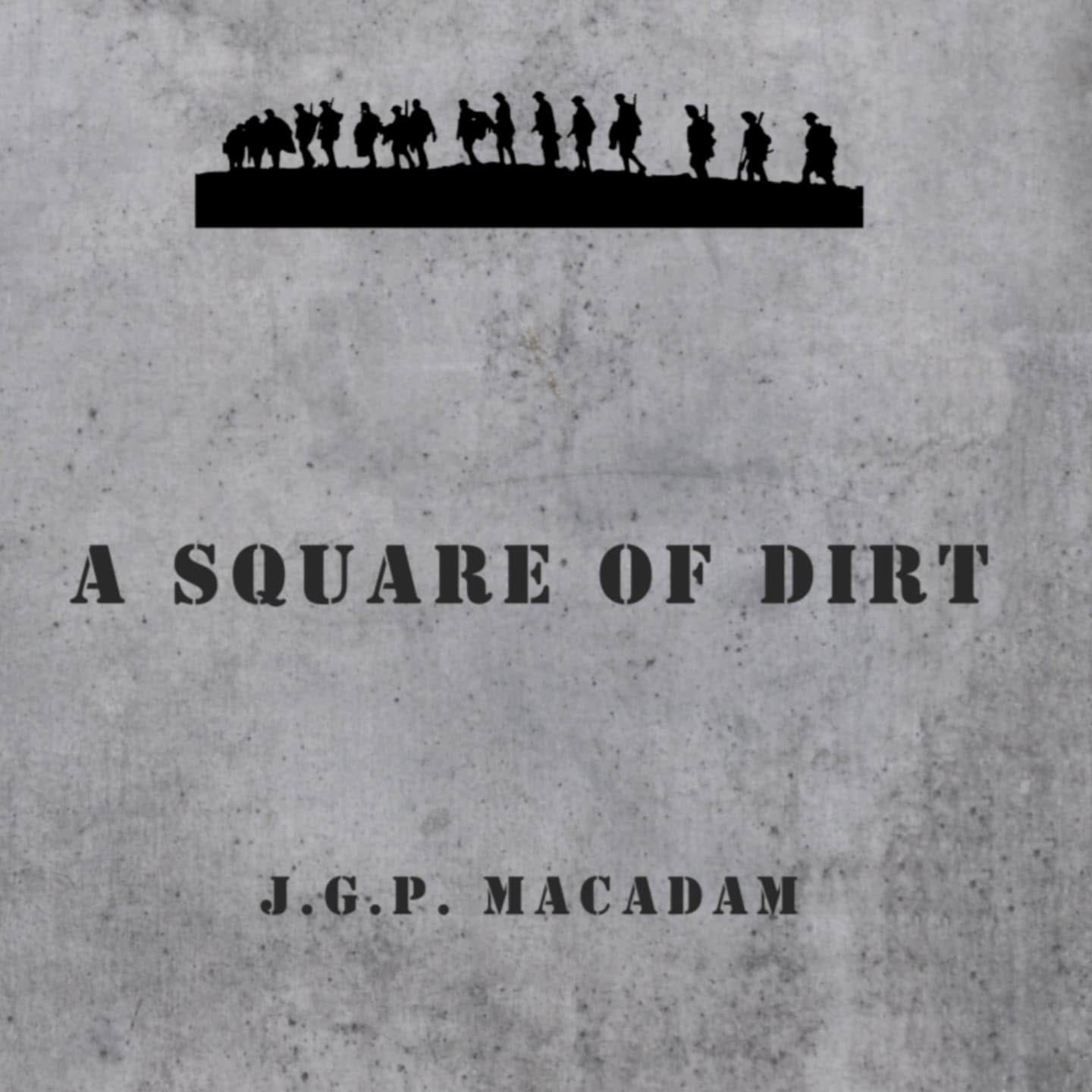
Someone recently messaged me with an “I bought your book!” Every time, I swear, it takes a bit of my breath away…
Not only the fact that I have a book out there in the world (more like a booklet), but that there continue to be people who want to read it. Sales might be in the onesies and twosies and mostly based upon connections via social media, but that people keep coming across it and leaving me notes about how they purchased a copy or what they thought after reading—it is simply astonishing.
So, in gratitude, I thought I might post this comical interview of myself interviewing, um, myself. I already have a book interview (a proper one) through franknews, but I thought this one might help explain some of the writerly decisions I’ve made while composing this work. What do I mean ending this story where I end it? Is this unbodied-character based upon an actual person? Those types of questions…
My booklet being, of course, A Square of Dirt, which was published in January 2025 by ELJ Editions. It’s about the birth, life and, yes, death of a firebase in the Tangi Valley, Afghanistan, with its most interesting claim-to-fame probably being that it’s told from the point of view of the base itself. So we see not only what one deployment does, but multiple deployments, multiple years, in the same place. American occupation, Afghan Republic taking over, and then (since we all know how Afghanistan “ends” in the Western psyche) the Taliban. It’s the story of one base and what it saw in one tiny corner of the war.
I’m not the first person to have the idea of an inanimate object telling a story…
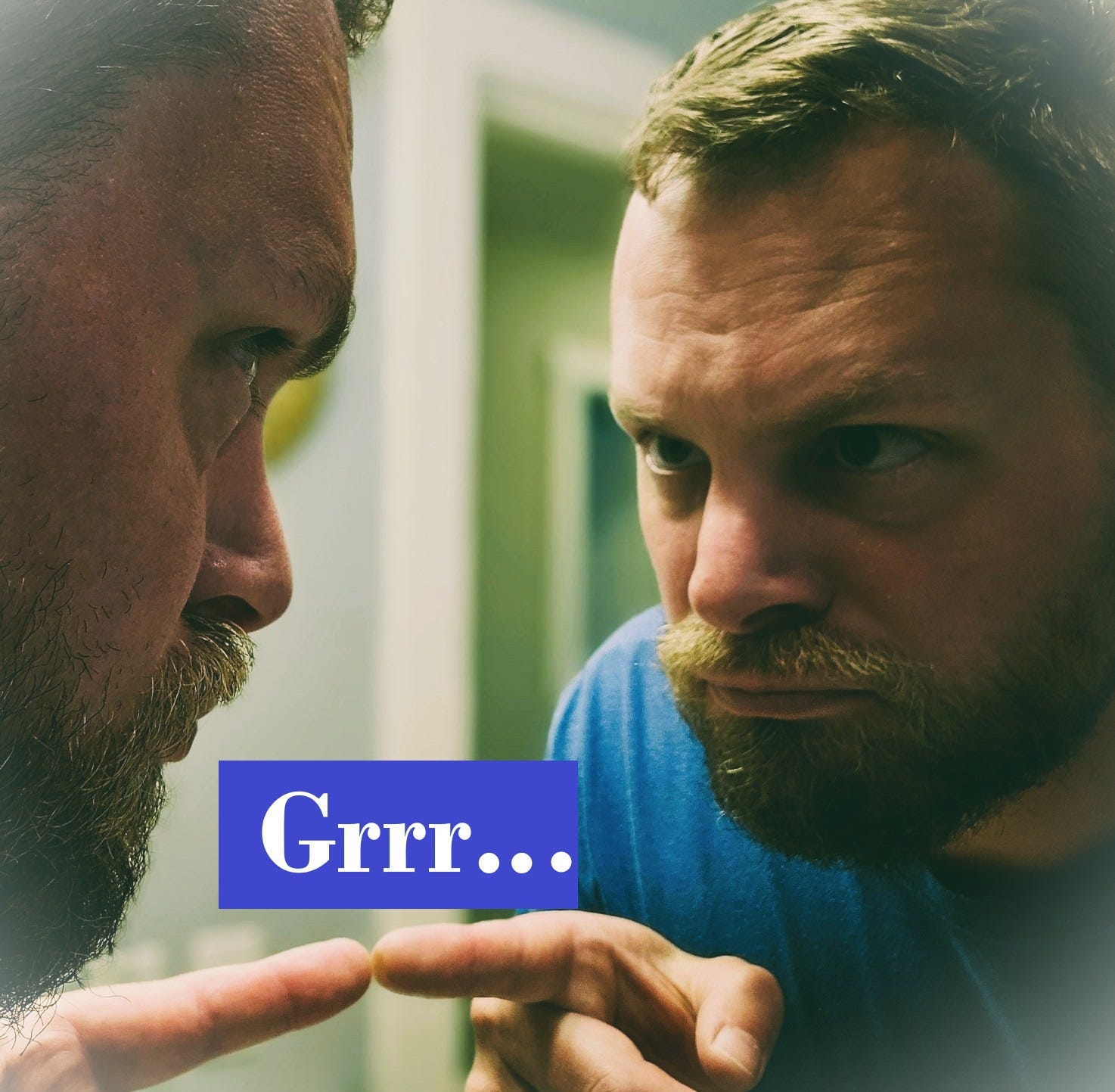
To conduct this interview, I conjured a character of myself, you might say. A Myself-Who-Is-Not-Myself, heretofore acronymed as MWINM. (I pronounce it like mm-win-em.) Everyone has a MWINM, I figure. It’s that little voice in the back of your head endlessly waiting to chastise you, to question why you’re even writing this, or perhaps why you exist at all.
Is MWINM the voice of peer pressure we’ve internalized? The voice of society? Of anxiety? The nagging sense of never being good enough?
Yes, to all of the above.
That’s why I want to give MWINM this forum to spread his wings and get nasty. I’ve been battling MWINM for years, at this point, and I’m well-studied in all his tricks and tantrums. (MWINM might even be my alter-ego…)
So, without further ado, welcome MWINM to the stage.
MWINM: Hey, Mackey! How ya doing? Great to be here.
JGP: Thanks, MWINM. Glad to be doing this interview with you.
MWINM: You suck.
JGP: So you’ve been informing me since literally childhood…
MWINM: Just wanted to get that out in the open right off the bat. I think you suck. I can’t stand your writing. The sound of your voice in my head is like… nails on a chalkboard amplified over a stadium-sized sound system.
JGP: You have a head? While inside my head?
MWINM: Don’t get bogged down in technicalities, Mackey Mack. We’re here to talk about this fifty pages of a high-grade clusterfuck you call a book.
JGP: More like a booklet.
MWINM: Whatever you call it, I wouldn’t even use the thing for toilet paper. Okay, so what’s with the weird quote in the opening of this thing? What even is The Dream of the Rood?
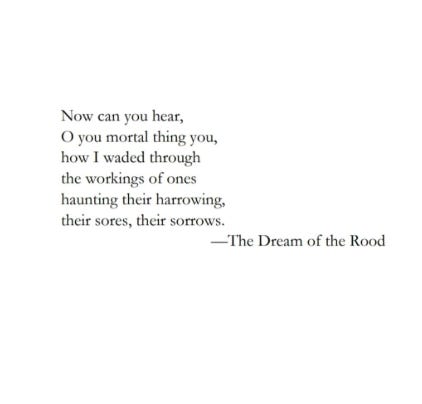
JGP: The Dream of the Rood is an Old English poem from the 10th century. It’s about this vision where this guy hears the Cross—as in the Cross, the one Christ was crucified upon—speaking to him in a dream. That’s what “rood” means. It means rod, or pole, or, in this case, cross.
MWINM: So… talking wood?
JGP: Yeah, exactly. The part that I quote is actually from a speech that the Rood gives. It’s all about what it feels like to have nails hammered through you and the blood of Christ soaking into your wounds.
MWINM: You only put that in there to show off how fancy schmants well-read you are, didn’t you?
JGP: I’m not that well-read. Okay, maybe a little…
MWINM: I knew you were ego-tripping. You’re such a show-off. Remember, I can read you like a book (ha). Anyhoo, so why include the Rood thing?
JGP: What the Cross in The Dream of the Rood is doing is exactly what my narrator in A Square of Dirt is doing. I’m not the first person to have the idea of an inanimate object telling a story. Even in modern times, in other stories that’ve come out of the War on Terror, there are all kinds of different points-of-view telling stories.
How do you begin to tell the story of a 20-year war?
Like in Anatomy of a Soldier by Harry Parker, there’s everything from dog tags around a soldier’s neck to a hypodermic needle telling you what it’s like to pierce a patient’s skin. Novels like Fives and Twenty-Fives by Michael Pitre and short stories in collections like Fire & Forget often feature multiple points of view—to include Iraqi and Afghani first-person points of view, albeit protagonists still written by a Western military veteran like myself.
MWINM: Why is that, you think? Why’re all these veteran-writers telling stories from “other” points of view? Pretend like I give a shit about your opinion.
JGP: It’s a generational thing, I think.
MWINM: Like millennials are a bunch of bleeding-heart softies, right? The good ol’ John Wayne soldier-hero POV ain’t good enough for y’all anymore, is that it?
JGP: No, not quite… it’s like we’re all, as a society, across generations, becoming more aware of the “other side” in war. I think recent veterans have written stories from those “other” points of view in order to decenter their own experience, and so process it maybe a little better. But also to answer a market demand. Especially among a reading audience which doesn’t only want to hear soldier-centric stories about combat or about how absurd military life can be. We’ve already heard those stories, right? From prior generations of veteran-writers.
And, while it may seem like a modern, weird, quirky, very literary thing to do—to tell a war story from an “other” point of view, like that of inanimate object—it’s not actually novel or modern at all. That’s what I’m trying to say with the whole Dream of the Rood thing. People have been rehashing war stories and traditional stories like the Crucifixion from “other” points of view for at least a thousand years.
MWINM: So, turning an object into the subject, I get it. I get it. Okay, so, why a firebase? What is it about a base’s perspective that it deserves to have its own personified-object story told? Where’d the idea come from?
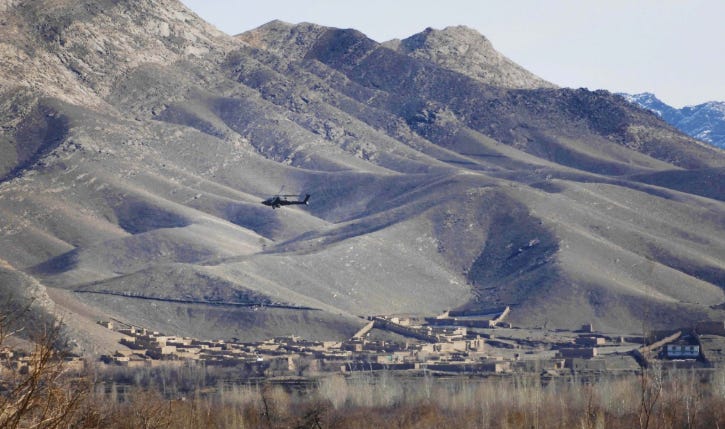
JGP: The idea came from the voice actually. Like there was this contemplative yet sardonic voice in my head, disembodied, wanting to comment on this thing called “the war in Afghanistan” but not able to occupy any one human avatar, or protagonist, especially for a war that lasts that long. I mean, how do you begin tell the story of a 20-year war?
The voice, or point-of-view, that tries to tell that story must take in not only one deployment experience, not only multiple deployment experiences, but nonstop, back-to-back deployments in the exact same place. Where there is no clear beginning, middle, end of deployment, or a return-journey home, or a readapting (or not) to civilian life—which is the arc so many soldier-centric stories tend to have—but a continuous combat-telling, a truly “endless” forever-happening, never-ending war. Typified not so much by a deployment cycle but by the natural turn of the seasons in this one place upon the earth called Afghanistan.
There is a limit to empathy…
Out of that need for that voice—a voice which could tell the story of a super long war—came this idea: what if the walls of this one firebase, say in a highly contested battlespace like the Tangi, could speak?
MWINM: And that’s what you do in A Square of Dirt. The walls literally talk, but no one can hear what it’s saying. It’s just speaking into a void with no dialogue or feedback, like no one’s listening. You trying to say something with a narrator like that? Something about how Afghanistan went on, and on, and on, but with no one back home really paying attention?
JGP: What do you think?
MWINM: I think it’s fucking frustrating as hell the way you tell this story, with all these back-to-back deployments of different Americans, then different Afghans. I got so emotionally invested in that first American company’s story: Sergeant Gordon being a prick, his newbie private getting used and abused, Captain Li’s loss of faith… Why yank us out of that classic band of brother’s story?
JGP: Because that’s how it really happened on the ground from the point of view of the ground itself. If you’re an Afghan, an elder, sitting down talking with a handful of American officers, making deals with them, getting invested in their plans and opportunities to, say, build a bridge or a school in your valley, but then those Americans go away after a year and another set come in, and maybe the new American officers don’t have exactly the same ideas about what they want to do in your valley—that is exactly how it feels to have one unit after another rotating in then out, in then out, in then out, year after year after year… you get yanked around a lot.
MWINM: I noticed something you did in this story with the names. All the Americans got names from bases: Gordon, Stuttgart, Detrick, Hood, Li, Jackson, and so on, like they’re named after Fort Gordon, Georgia, or Fort Hood, Texas, before the name-change era of recent memory. You probably thought you were being pretty clever with that one, huh?
JGP: It’s about the base’s point of view being an undeniably human one, you know? A Westerner’s point of view. What is, ultimately, the author’s (my own) point of view. It’s about identity. It’s about how no point of view in a story told by a single author could ever truly get outside that author’s own identity. The author might do a buttload of research, might live among a wholly foreign people or person, but the second they put pen to paper pretending to be someone they’re not, it’s fiction. It’s fiction written by someone pretending, which is fun, and necessary, and children do it all the time, for good reason, but which is ultimately a kind of game the author is playing with themselves, and with their audience. It’s not the real thing, it can’t ever be. Writing fiction isn’t supposed to be the real thing. In that way, there is a limit to empathy.
And this firebase’s story continues after the Americans leave, so how was I, former American soldier, supposed to tell the story of the Afghan Army occupying this battlespace? I’m not even going to pretend to tell that story from anything approaching an authentic point of view. Especially not in the first-person. So, how do I tell the story of a 20-year war but incorporate these necessary Afghan voices when I’m not Afghan?
The base listening to those Afghan voices gave me a way to work around that.
MWINM: The fucking knots you writers will tie yourselves into… Okay, so I don’t want to give away the ending, but could you possibly be any more depressing?
JGP: I wasn’t there when Kabul fell, in 2021. I know about as much as anyone else who watched the news of that event. But I had been more or less following what was going on in Afghanistan since my last deployment in 2009. I watched documentaries and read investigative journalism concerning how the Afghan forces were falling back, district after district, and how the Taliban were advancing. America’s abandonment of Afghanistan isn’t something that happened all at once, in one month, or one day, but over a span of years.
How else could this story end than on the theme of abandonment?
That’s how the withdrawal really happened. One base at a time over years.
At the height of the war, roundabout 2010, there were over 700 bases, outposts, and airfields in Afghanistan. Those bases were closed, handed over, or taken over, one at a time. That 700 figure whittled down to a 100, then 50, then 20, then two, then one, then none.
That’s literally hundreds of tiny abandonments taking place all over Afghanistan over the course of a decade—preceding the final abandonment in Kabul. Though this story doesn’t go that far—to 2021—we do get to about 2014, when America was already beginning its long withdrawal from the more contested battlespaces like the Tangi.
So, how else could this story end than on the theme of abandonment?
MWINM: Still depressing as fuck. You couldn’t throw in a joke or two to soften the landing? Or a star-spangled fist fight to the death? A mega-battle with fireworks and shit? Gimme a friggin break here. You call this a story? I want to be entertained! Not feel like I wanna go jump off a bridge!
JGP: Okay, back to the cesspool of my unconscious with you.
MWINM: I’m tired of talking to you anyways.
JGP: You can only take so much of yourself, or—er, myself.
MWINM: Good riddance, I’m outta here. Do me a favor: next time you wanna do another one a’ these fake fucking interviews, send me a text or email. That way I can pretend it landed in the spam folder and I never saw it.
JGP: Bye, MWINM. Until next time…
I hope this little sideshow proved explanatory and, perhaps, revealing. I’ve got a bunch of Instagram posts featuring A Square of Dirt right here. And here’s the link to snag a copy, if so inclined.
And, to all my subscribers, until next we meet…